
For a single, highly detailed design or a one-off order, DTG wins on flexibility and color range. For 50 or more shirts with two or three flat colors, screen printing wins on cost per unit and wash durability. Get a physical sample on your actual blank before you commit either way. The right answer depends less on which method is “better” and more on your order size and artwork.
TL;DR:
- Screen printing is more cost-effective for orders of 50 or more shirts with one to four flat colors, especially on heavyweight fabrics, due to lower per-unit costs after setup.
- DTG excels on high-cotton garments for photographic, detailed, and multicolor artwork, with no setup fees for small quantities, making it ideal for complex designs and quick turnaround.
- Durability depends heavily on curing and fabric, with screen printing generally lasting longer in wash tests, but a well-cured DTG print on the right fabric can perform equally well.
- Fabric type and pretreatment requirements significantly impact print quality, as DTG struggles with polyester and synthetic blends without proper pretreatment, while screen printing handles most fabric types readily.
- Small brands should demand itemized quotes that specify pretreatment, curing, and setup costs to avoid hidden fees and ensure accurate budget planning.
Table of Contents
- DTG vs Screen Print: Comparing the Factors That Actually Matter
- When Does DTG or Screen Printing Cost Less?
- Does Fabric Type Change the Print Method You Should Use?
- Which Artwork Files Work Best for Each Method?
- How Long Will a Printed Shirt Actually Last?
- A Quick Decision Checklist for DTG vs Screen Printing
- How Heavyweight Streetwear Changes the Print Equation
- What Small Brands Get Wrong About Print Decisions
- Explore Heavyweight Blanks Built for Either Print Method
- Where These Claims Come From
- Sources
- FAQ
DTG vs Screen Print: Comparing the Factors That Actually Matter
Both methods can produce great shirts. They just get there through completely different mechanics, and that difference shows up in everything from your invoice to how the shirt feels after 20 washes.
Durability and wash life depend on more than the printing method alone. Screen printing generally holds up better to washing and abrasion in controlled testing, but the research on textile printing methods is clear that curing, ink chemistry, and fabric all shape the final result as much as the method itself. A poorly cured DTG print will crack faster than a well-cured one, and a screen print with underbaked plastisol ink will fail just as easily.
Print quality and feel split cleanly by artwork type. DTG lays down ink pixel by pixel, so photographic gradients, drop shadows, and multicolor artwork print without extra cost or setup. Screen printing builds color in layers of ink pushed through mesh screens, which gives you thick, opaque coverage and a more tactile, almost raised feel, especially with plastisol. That’s part of why puff print (a raised, 3D screen-print effect) exists as a screen printing specialty. It’s simply not achievable with DTG.
Cost and scalability hinge on volume. Kornit’s industry comparison frames this as flexibility versus repeat-production efficiency: DTG suits variable, detailed jobs with no setup cost, while screen printing rewards repetition because the screens, once burned, print thousands of identical images cheaply.
Fabric compatibility favors DTG on high-cotton garments and favors screen printing almost everywhere, including poly-blends, performance fabrics, and even bags or hats.
Turnaround time usually favors DTG for small runs since there’s no screen prep, but screen printing pulls ahead once a shop is running a design at volume, since the press can churn through hundreds of shirts an hour.
Sustainability cuts both ways. Shopify’s analysis notes that on-demand DTG reduces overproduction waste since you print only what sells, while screen printing generates more upfront waste (test prints, screen reclaiming chemicals) but less long-run ink waste per unit at scale.
Here’s the factor-by-factor snapshot:
- Durability: Screen printing typically outlasts DTG in wash testing, but curing quality matters more than method alone.
- Best for: DTG suits photorealistic art; screen printing suits bold, spot-color graphics.
- Cost: DTG has no setup fee but higher per-unit cost; screen printing has setup fees that amortize down at volume.
- Fabric range: DTG needs high cotton content; screen printing works across cotton, blends, and polyester.
- Feel: DTG sits nearly flat on fabric; screen printing (especially plastisol) has visible texture.
- Speed at scale: DTG is faster for one-offs; screen printing is faster per unit once screens are burned.
- Waste profile: DTG cuts overproduction; screen printing cuts long-run material waste per shirt.
Pro Tip: Ask any decorator you’re considering to run one printed and washed sample on your exact blank before you place a full order. A vendor’s mockup on a stock photo tells you nothing about how ink behaves on your specific fabric.
When Does DTG or Screen Printing Cost Less?
Screen printing’s cost curve is simple: pay for screens and setup once, then unit price drops as quantity rises. A four-color design might cost $40 to $75 in setup (one screen per color), but each shirt after that could run $3 to $6 depending on quantity and shirt color. DTG flips that model. There’s no screen to burn, so a single shirt costs about the same per unit whether you order one or 20. But DTG has its own hidden variable cost: a white underbase layer required on dark garments takes more ink and more print time than printing on white shirts, which raises the per-unit price on colored blanks.
Three quick scenarios show how this plays out in practice:
- One shirt, photo-quality art: DTG wins outright. No shop wants to burn four screens for a single unit, and even if they did, you’d pay far more than a DTG print costs.
- Twenty shirts, a detailed photographic design: Still DTG, generally. Screen printing setup costs for a complex multicolor image at this quantity rarely pencil out against DTG’s flat per-unit rate.
- 200 shirts, one or two flat colors: Screen printing wins decisively. The setup cost spreads across enough units that per-shirt pricing often falls below what DTG can match, and the print holds up better over time.
Before you accept any quote, confirm what’s actually included. Kornit’s buyer guidance recommends checking whether pretreatment, curing, screen setup, artwork separations, and multiple print locations are itemized separately or bundled into the quoted price. Two quotes that look identical on the surface can differ by hundreds of dollars once you see what’s missing.
Pro Tip: If a quote doesn’t specify curing method or pretreatment cost for DTG, ask directly. Vague line items are where surprise fees hide.
Does Fabric Type Change the Print Method You Should Use?
Fabric content decides more of your outcome than most people expect. DTG performs best on high-cotton, moderately loose weaves because the ink needs fiber to absorb into. Tight synthetic weaves and polyester resist that absorption, which is why polyester and treated or moisture-wicking finishes often produce dull, patchy DTG results.
Pretreatment is the single most decisive variable for DTG on dark garments. DuPont’s Artistri pretreatment guidance explains that white ink needs a properly applied pretreatment layer to bond and stay opaque. Skip it or apply it unevenly, and you get faded colors, poor adhesion, or a visible white-ink halo around the design. Cotton and polyester ratios matter too: DuPont notes blends up to roughly 50% polyester generally need specialized pretreatment systems to hold ink properly.
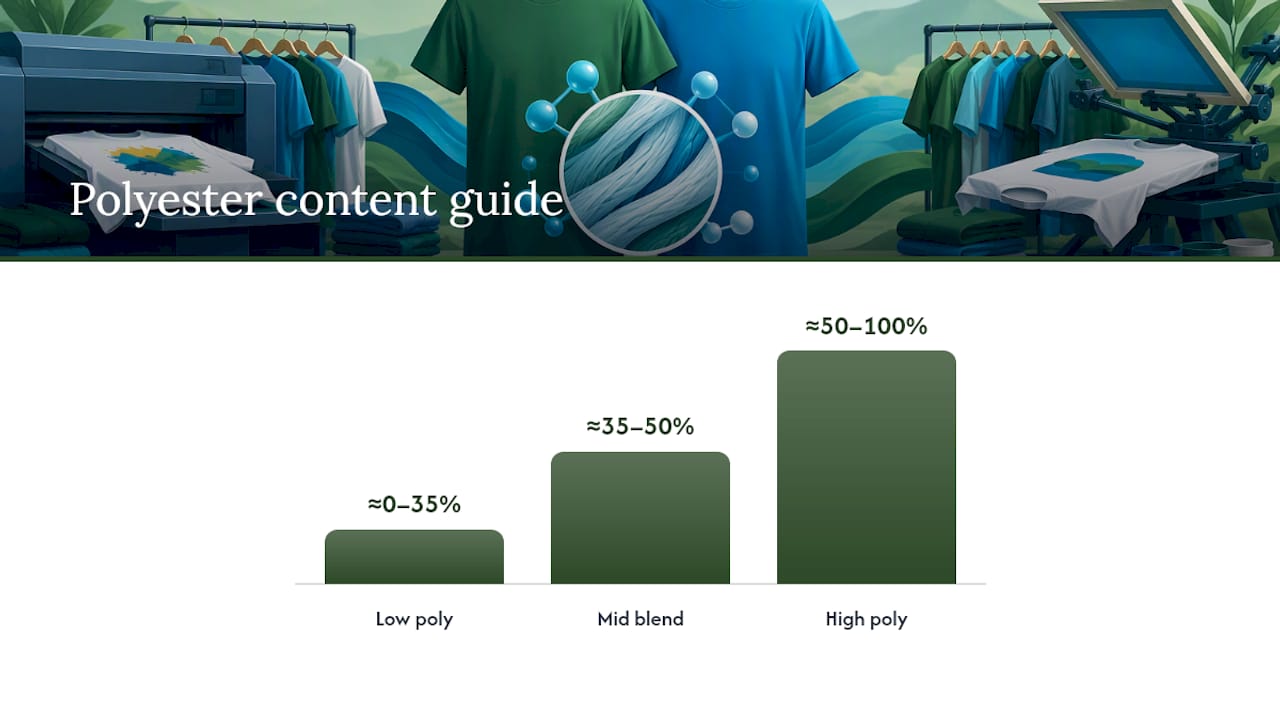
Screen printing simply covers more ground. It handles cotton, poly-blends, and full polyester without special pretreatment, and it supports specialty inks like discharge (which removes dye from the fabric for a soft, vintage look) or plastisol (which sits on top for maximum opacity and durability).
A few fast rules worth remembering:
- Test the exact blank you plan to sell, not a similar one from the same supplier.
- Document pretreatment amount and curing temperature if you’re comparing multiple print runs.
- Assume any garment over roughly 35 to 40% polyester needs a screen-printing conversation, not a DTG one, unless your printer confirms specialized pretreatment.
A nominal fabric percentage on the tag isn’t the whole story. Weave tightness and finish treatments change ink behavior even between two shirts labeled “100% cotton,” which is why testing the actual blank matters more than trusting the label.
Which Artwork Files Work Best for Each Method?
Your artwork format often decides your method before cost or fabric even enter the conversation. DTG handles high-resolution raster files, PNG format at 150 to 300 dpi with a transparent background, extremely well. That makes it the natural choice for photographic prints, detailed illustrations, and gradients that would require dozens of screens to reproduce any other way.
Screen printing wants the opposite: vector files with clean color separations. Each spot color becomes its own screen, so bold logos, text-heavy designs, and simple graphic marks are where this method shines, both in cost and in crisp, saturated color.
A few technical details worth knowing before you submit art:
- Halftones (tiny dots that simulate gradients in screen printing) can approximate soft shading, but they need a skilled printer and the right mesh count to look clean rather than grainy.
- Mesh count limits fine detail in screen printing. Higher mesh holds finer detail but less ink; lower mesh lays down more ink but loses crispness.
- Special effects like puff print, metallic foil, and glitter ink are screen-printing exclusives. DTG cannot replicate that raised or reflective texture.
Before finalizing your design, ask your decorator what file specs they accept and whether they’ll run a sample proof. That one question catches more preventable problems than any design software feature.
How Long Will a Printed Shirt Actually Last?
Screen printing tends to outperform digital prints in wash and abrasion testing, according to comparative research on textile printing quality. But that same research is careful to note the result depends heavily on ink chemistry, curing accuracy, and the fabric underneath. A thesis on direct-to-garment printing technologies found some digital prints lost measurable quality after repeated wash cycles in test protocols, particularly when pretreatment or curing fell short of spec.
That’s a critical distinction: “screen printing lasts longer” isn’t a law of physics. It’s a tendency that shows up in typical production, but a well-cured DTG print with correct pretreatment can hold up far better than a rushed, undercured screen print.
Care habits extend either method’s life:
- Wash printed garments inside out on a mild or cold cycle.
- Skip the dryer’s high heat setting, or better yet, air dry.
- Avoid fabric softener, which can degrade ink adhesion over time.
When a vendor claims their print survives “50 washes” or “100 washes,” ask what test parameters back that number, water temperature, detergent type, dryer heat, and wash cycle count. A claim with no testing conditions attached tells you nothing you can verify.
A Quick Decision Checklist for DTG vs Screen Printing
Cut through the analysis with a short gut-check before you order:
- Choose DTG when your order is under roughly 20 to 30 units, your design has photographic detail or many colors, or you need fast turnaround without screen setup.
- Choose screen printing when your order is 50-plus units, your artwork uses one to four flat colors, or wash durability is your top priority.
- Consider both on one product if you’re running a small drop with a detailed front graphic (DTG) and a simple one-color back tag or sleeve print (screen printing) to balance cost and detail.
- Confirm with any supplier before ordering: pretreatment process, curing verification, minimum order quantities, and whether sample approval is included in the quote.
Pro Tip: If you’re unsure which category your order falls into, request pricing for both methods at your exact quantity. The break-even point moves depending on color count, so guessing rarely beats getting two real quotes side by side.
How Heavyweight Streetwear Changes the Print Equation
Heavyweight cotton blanks change the math slightly. A thick, tightly constructed cotton tee or hoodie holds screen-printed ink exceptionally well because the fabric has enough body to support thick plastisol layers without distorting under the print. That’s part of why bold, statement graphics on heavier fabric tend to favor screen printing when the design uses one to three colors.
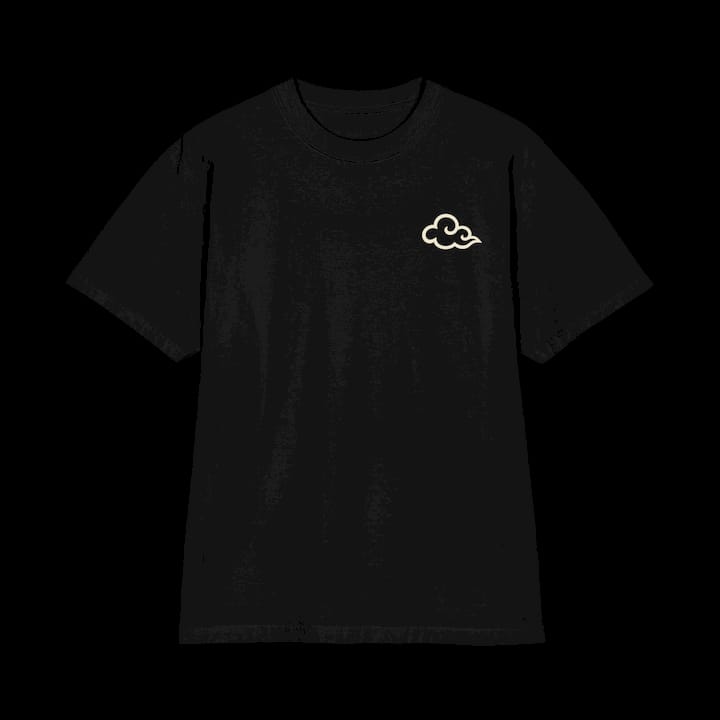
At this brand, that logic shows up directly in product choices. A design like the Motion Over Emotion statement print on a max heavyweight tee is exactly the kind of bold, spot-color graphic that plays to screen printing’s strengths: high opacity, sharp edges, and a tactile finish that holds up on heavy cotton. A muscle shirt like Warning, where the print sits directly against skin and fabric during workouts, also benefits from that same durability profile.
For finer detail work or gradient-heavy graphics, high-cotton heavyweight tees still work well with DTG, provided the blank is pretreated correctly and the design plays to DTG’s photographic strengths rather than fighting them.
What Small Brands Get Wrong About Print Decisions
Most small brands treat printing quotes as a single number instead of a checklist. That’s a mistake. Ask any vendor how they verify curing, not just whether they pretreat. Undercured ink is invisible until the third wash, and by then you’ve already shipped it to a customer.
Get itemized quotes that separate pretreatment, screen setup, and per-location printing costs. A bundled “flat rate” quote often hides a corner being cut somewhere in that process.
One more thing worth remembering: on-demand DTG genuinely reduces overproduction waste compared to guessing at bulk quantities and hoping they sell. For a small brand testing new designs, that flexibility is worth more than the lower per-unit cost of a 500-piece screen run you might not sell through.
— Cloudy
Explore Heavyweight Blanks Built for Either Print Method
Cloudywingz builds every piece from heavyweight cotton specifically because it holds both detailed DTG work and bold screen-printed graphics without losing shape or feel over time. Whether you’re testing a photographic design or a bold statement graphic, the blank matters as much as the print method.
Browse the tees collection or the hoodies collection to see the weight and construction firsthand, and check the Own Things oversized hoodie or the F Normal oversized hoodie if you want examples of how bold graphics sit on heavier fabric. Sizes run S to 5XL, and free shipping applies to orders over a certain amount. If you’re deciding between print methods for your own design, start by requesting a sample on the exact blank you’re considering. Reach out through the site to ask about a decorated sample order before committing to a full run.
Where These Claims Come From
The technical claims in this guide draw from a handful of sources worth reading directly if you want to go deeper:
- DuPont’s Artistri pretreatment guidance covers pretreatment chemistry and fabric-blend limits for DTG.
- Kornit’s DTG vs screen printing comparison frames the industry-standard flexibility-versus-efficiency trade-off.
- Shopify’s breakdown of cost factors explains what actually drives price differences between the two methods.
- An academic study on textile printing durability provides controlled testing data on wash and abrasion resistance.
Sources
- DuPont Artistri DTG pre-treatment guidance
- DTG Printing vs Screen Printing | Kornit Digital
- DTG vs. Screen Printing: Factors to Consider for Your Brand (Shopify)
- Analysis of Methods of Printing Images on Textile Materials and Evaluation of Their Quality
FAQ
What are the disadvantages of DTG printing?
DTG struggles with polyester and tightly woven synthetic fabrics because the ink needs fiber absorption to bond well. It also costs more per unit than screen printing at higher volumes, and results depend heavily on correct pretreatment, since uneven pretreatment application can cause weak adhesion or a visible white-ink halo.
How can you tell if a shirt is screen-printed or DTG?
Screen-printed designs usually have a slightly raised, more textured feel, especially with plastisol ink, and colors sit in flat, distinct layers. DTG prints sit nearly flush with the fabric and can show smooth gradients or photographic detail that screen printing typically cannot reproduce without many separate screens.
Which lasts longer, screen printing or DTG?
Screen printing generally holds up better to washing and abrasion in controlled testing, according to textile printing research. But durability for either method depends on curing accuracy and fabric quality, so a well-cured DTG print can outlast a poorly cured screen print.
What is cheaper, DTG or screen printing?
For small orders, roughly under 20 to 30 units, DTG is usually cheaper since it has no setup cost. For larger runs of 50 or more units with simple color counts, screen printing typically costs less per unit because setup fees spread across more shirts, as Shopify’s cost analysis explains.
Does Cloudywingz use DTG or screen printing?
Cloudywingz’s product decisions favor heavyweight cotton blanks that support both methods depending on the design. Bold, statement graphics on pieces like the Motion Over Emotion tee lean on techniques suited to spot-color durability, while current print details for any specific product are listed on its individual product page.