
Cloudy Wingz Men’s Heavyweight Sweatpants are the pick for anyone tired of thin joggers that pill after two washes and let cold air through at the ankle. They’re built from heavy cotton fleece, double-stitched at the stress points, and sized S to 5XL, so they hold their shape season after season. If you want a pair for lounging, cold-weather layering, or just standing outside without shivering, this is where to start.
TL;DR:
- The sweatpants are made from heavy cotton fleece with a GSM range of 380 to 500, ensuring durability, warmth, and resistance to pilling.
- They feature reinforced double-stitched seams at high-stress points and deep pockets capable of securely holding a phone or keys.
- The sizing runs from S to 5XL, accommodating larger body types often left out by competitors, with size recommendations leaning toward sizing up if layering.
- Proper care involves washing in cold or warm water, avoiding high heat, and air drying, which preserves fabric softness and prevents shrinkage.
- Matching the pants with a heavyweight hoodie creates a durable, insulated cold-weather outfit suited for lounging, layering, or outdoor activities.
Table of Contents
- What To Know About Cloudy Wingz Heavyweight Sweatpants
- What Makes Sweatpants Actually “Thick”?
- How To Choose the Right Pair
- Getting the Fit Right When the Fabric Is Heavy
- Washing and Drying Without Ruining the Thickness
- Where Heavyweight Sweatpants Actually Earn Their Keep
- Why Fabric Weight and Construction Actually Matter Here
- Ready to Get a Pair That Actually Holds Up?
- An Editorial Note on Buying Heavyweight Cotton
- Sources
- FAQ
What To Know About Cloudy Wingz Heavyweight Sweatpants
Cloudy Wingz built its heavyweight sweatpants line around one idea: streetwear should survive real wear, not just look good in a product photo. Both the men’s and ladies’ versions use a heavy cotton fleece construction designed to hold shape wash after wash, and both run S through 5XL, which puts them ahead of a lot of competitors who cap out at XL and leave bigger guys scrambling for options.
The men’s pair leans into a relaxed, slightly oversized cut that pairs naturally with the brand’s bold graphic aesthetic. Double-stitched seams reinforce the areas that take the most stress: the crotch, the inseam, and the waistband attachment points. Ribbed cuffs at the ankle keep cold air out and stop the classic sweatpant problem of fabric bunching up around your shoes. Side pockets are deep enough to actually hold a phone without it sliding out when you sit down.
The ladies’ heavyweight sweatpants share the same fabric weight and construction logic but are cut to a different fit block, so the drape sits right instead of just being a scaled-down men’s pattern. That matters more than most brands admit. A lot of “unisex” heavyweight sweatpants are really just men’s patterns resized, and the rise and taper end up wrong on a female body.
For a layering piece up top, the House of Clouds Heavy Hitter Oversized Heavyweight Hoodie uses the same weight-first philosophy. It’s cut oversized on purpose, built from a heavy fleece that matches the density of the sweatpants, and finished with the kind of bold graphic work House of Clouds is known for. Pairing the hoodie with the men’s sweatpants gives you a matched heavyweight set instead of mixing a thick bottom with a thin top that undercuts the whole look.
What buyers consistently look for in this category:
- Fabric weight heavy enough to block wind, not just look thick on a hanger
- Double-stitched or flatlock seams at the crotch and inseam
- Ribbed waistband and cuffs that keep their stretch after repeated washing
- Pockets deep enough to secure a phone or keys during movement
- A size range that doesn’t stop at XL
Pro Tip: If you’re buying for cold-weather wear, order the men’s heavyweight sweatpants and the Heavy Hitter hoodie together. Matching fabric weights means the two pieces age at the same rate, so you don’t end up with a pilled bottom and a still-fresh top a year later.
Sizing runs true for most buyers, but heavyweight cotton has less stretch than a blended fleece, so if you’re between sizes and plan to layer with thermals underneath, size up rather than down. The brand offers convenient shipping and returns options to help reduce the risk of ordering heavyweight items online without feeling the fabric first.
One more detail worth flagging: reviewers of heavyweight sweatpants in general consistently call out pockets, zipper security, and seam quality as the details that separate a pair that lasts from one that doesn’t. Check those three things on any product page before you buy, regardless of brand.
What Makes Sweatpants Actually “Thick”?
Thickness in sweatpants comes down to one number most shoppers never check: grams per square meter, or GSM. It measures how much a square meter of the fabric weighs, and it’s the single most reliable spec for predicting whether a pair will feel substantial or flimsy the moment you put it on.
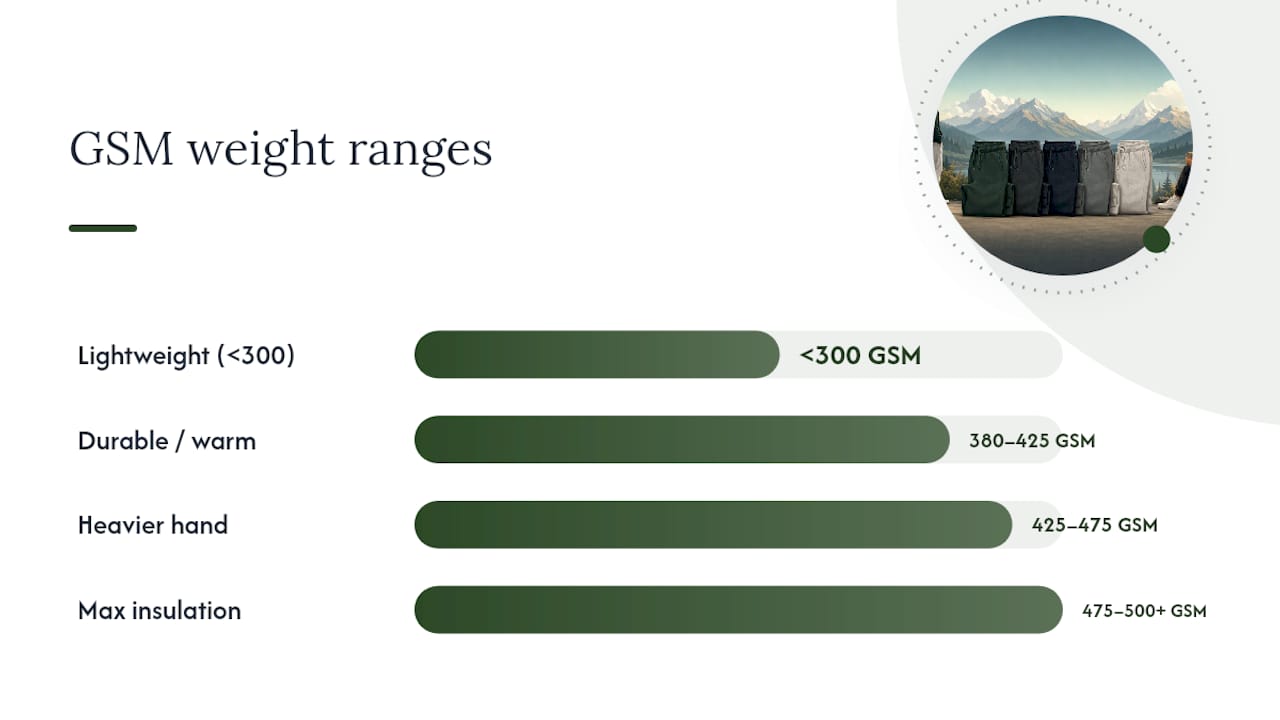
Anything below 300 GSM reads as lightweight, athletic wear built for movement over insulation. The heavyweight category generally starts around 380 GSM and climbs toward 500 GSM or more at the top end. Retail listings commonly market 400 to 500 GSM fleece as “heavyweight”, and that range is where most premium sweatpants brands position their flagship products.
Here’s what those numbers actually feel like on your body:
- 380 to 425 GSM: durable and warm, with some give for movement. Several heritage manufacturers treat this range as their signature “classic” weight, and it’s a strong middle ground for daily wear.
- 425 to 475 GSM: noticeably heavier hand, better wind resistance, still flexible enough for walking or light activity.
- 475 to 500+ GSM: maximum insulation and structure, best suited to cold climates or pure lounging rather than anything athletic.
GSM alone doesn’t tell the whole story, though. The knit structure matters just as much as the weight. Cotton fleece is brushed on the inside to create that soft, fuzzy texture and traps air well, which is why it’s the default choice for heavyweight sweatpants. Loopback cotton, sometimes called French terry, keeps its uncut loops on the inside instead of brushing them, giving it a slightly rougher hand but often better shape retention over time. Brushed fleece sits between the two, brushed but usually at a lighter weight than pure heavyweight fleece.
Performance-oriented brands have started using mid-400s GSM French terry or loopback specifically because it balances that durability against mobility better than a stiffer, denser fleece. A mid-400s loopback gives you structure without feeling like you’re wearing a blanket, which is why it shows up so often in products aimed at guys who want warmth but still plan to move around in the pants.
The last piece of the puzzle is what happens to the fabric before it ever reaches you. Pre-laundering, sometimes marketed as enzyme washing, is a manufacturing step where the fabric or finished garment gets washed before packaging. This does two things: it softens the hand so the sweatpants don’t feel stiff out of the bag, and it pre-shrinks the fabric so you don’t lose an inch of length the first time you wash them at home. Pre-laundered heavyweight sweatpants show measurably less post-purchase shrinkage than fabric that hasn’t been treated, which is exactly why serious brands mention it on the product page.
How To Choose the Right Pair
Buying heavyweight sweatpants online means trusting a spec sheet instead of your hands, so knowing what to check, in what order, saves you from an expensive guess.
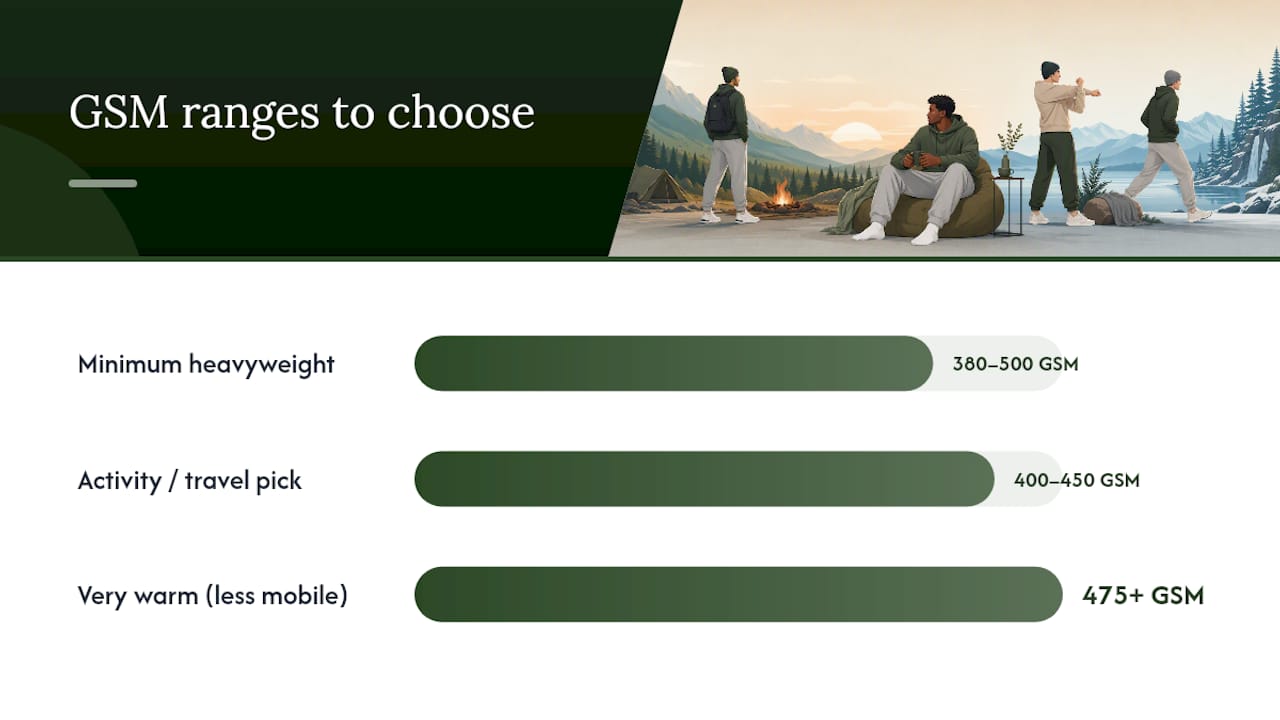
- Confirm the GSM. If a product page doesn’t list a specific number, be skeptical of any “heavyweight” claim. A real heavyweight pair states its weight, usually somewhere between 380 and 500 GSM.
- Identify the material. Cotton fleece, loopback, or French terry each behave differently. Fleece traps the most warmth; loopback holds its shape longest; French terry splits the difference.
- Check the fit description. Relaxed, tapered, straight, or oversized all fit differently even at the same waist size. Read the fit notes, not just the size chart.
- Look for construction detail. Double stitching, flatlock seams, and reinforced pockets are the features that determine whether the pants survive two years of washing or fall apart in six months.
- Verify pre-laundering or enzyme wash claims. This tells you how much shrinkage to expect and whether the fabric will feel stiff or soft right out of the packaging.
- Match the pants to your actual use case. Lounging calls for maximum GSM. Light activity or travel calls for something in the 400 to 450 GSM range that still moves with you.
- Read the care instructions before buying, not after. Heavier fabrics are less forgiving of high-heat drying, and knowing that upfront avoids a ruined first wash.
- Compare price against what you’re actually getting. A higher price should track with heavier fabric, better construction, and a wider size range, not just a bigger logo.
When you’re on a product page, three details separate a serious heavyweight sweatpant from a pair just borrowing the label. First, an exact GSM figure, not a vague word like “thick” or “premium.” Second, a country of manufacture or production note, since that often signals the quality control level behind the stitching. Third, specific reinforcement callouts like “double-stitched inseam” or “reinforced pocket bar tacks” rather than generic marketing language about durability.
Pro Tip: If a listing says “heavyweight” but won’t give you a GSM number anywhere on the page, treat that as a red flag. Legitimate heavyweight brands lead with the spec because it’s their strongest selling point. Vague language usually means the fabric is closer to mid-weight than the name suggests.
Watch for one common trade-off: the heaviest fabrics (475 GSM and up) sacrifice some mobility for warmth. That’s the right call for someone wearing sweatpants around the house or standing outside at a cold weather event, but it’s the wrong call for someone who wants to walk the dog or run errands in them all day. Buyer roundups consistently point to fabric type and GSM as the top two factors shoppers should weigh before anything else, including price or brand name.
Getting the Fit Right When the Fabric Is Heavy
Heavy fabric drapes differently than a lightweight jogger, which throws off a lot of guys who size based on habit instead of measurements. A pair that fits perfectly in a 300 GSM cotton blend can feel noticeably tighter in the same size at 450 GSM, simply because there’s more material sitting against your body.
Start with three measurements before you order anything: waist, inseam, and rise. Waist is measured around your natural waistline, not where your regular jeans sit. Inseam runs from the crotch seam to the bottom hem, and it’s the number that tells you whether the pants will pool at your ankles or hit right above your shoe. Rise, the distance from the crotch seam to the waistband, determines whether the fit feels low and relaxed or higher and more fitted. Manufacturer size charts and fit notes exist for exactly this reason, and skipping them is the single most common cause of a return.
Fit style changes how the extra fabric weight reads on your body:
- Tapered fit narrows toward the ankle, which keeps heavyweight fabric from looking bulky and works well if you plan to wear the pants with sneakers.
- Relaxed or straight fit keeps a consistent width down the leg, giving you more room for layering underneath during colder months.
- Oversized fit, like the cut Cloudywingz uses on its men’s heavyweight sweatpants, leans into the streetwear look and pairs naturally with an equally oversized hoodie on top.
Height changes the equation too. Taller guys in a 6’2" to 6’5" range should size up or check the inseam length specifically, since heavyweight fabric doesn’t stretch the way a lighter jogger does to compensate for a longer leg. Shorter guys under 5’7" often find relaxed or straight fits pool at the ankle unless they size down or look for a shorter inseam option specifically.
If you’re stuck between two sizes, the safest move depends on how you plan to wear them. Sizing up gives you room to layer thermals or leggings underneath for genuinely cold weather, and it keeps the oversized streetwear silhouette intact. Sizing down makes sense if you want a slimmer look and don’t plan on layering much, but understand that heavyweight cotton has less give than a cotton-poly blend, so a snug fit today can feel tight after the fabric’s first wash cycle if you’re not careful with heat.
Washing and Drying Without Ruining the Thickness
The biggest risk to a heavyweight sweatpant isn’t wear, it’s the washing machine. Cotton fleece and loopback fabrics respond badly to high heat, and the damage shows up as stiffness, shrinkage, or a fabric hand that never feels quite as soft as it did the day you bought it.
- Wash in cold or warm water, never hot, to protect the fibers from excess shrinkage.
- Skip fabric softener. It coats the fibers and actually reduces the fleece’s ability to trap warmth over time.
- Turn the pants inside out before washing to protect any printed graphics and reduce pilling on the outer surface.
- Air dry when possible, or use the lowest heat setting your dryer offers.
- Remove pilling with a fabric shaver rather than picking at it by hand, which can pull threads loose.
Practitioners who work directly with heavyweight cotton compare it to a structured knit that starts stiff and softens naturally after a handful of wears and washes, as long as you’re not blasting it with high heat in the meantime. High-heat drying is the fastest way to collapse those fibers permanently, and once that happens, no amount of gentle washing brings the softness back.
Pro Tip: Even if a product page advertises pre-laundering or an enzyme wash, don’t skip careful drying. Pre-treatment reduces shrinkage risk but doesn’t eliminate it, and a pre-laundered pair thrown in a high-heat dryer can still lose some of its shape over time.
A pre-laundered claim on the product page is a genuine advantage, but it’s a head start, not a guarantee. Treat every heavyweight pair, laundered or not, with the same low-heat routine and you’ll get years out of it instead of one good season.
Where Heavyweight Sweatpants Actually Earn Their Keep
The best test of a thick sweatpant isn’t how it looks in a mirror, it’s how it performs in situations where a thin jogger would fail you outright.
- Travel days: heavyweight sweatpants handle long flights or car rides better than denim, and they don’t wrinkle the way lighter fabrics do after hours of sitting.
- Cold-weather layering: pair them with thermals underneath and a heavyweight hoodie on top for genuine insulation on days when a normal jogger just isn’t enough.
- Gym-to-street looks: a tapered heavyweight pair works for the walk to the gym and the coffee run after, without looking like activewear once you’re off the treadmill.
- Pure lounging: this is where the heaviest GSM options, 475 and up, make the most sense, since mobility matters less than warmth and comfort.
Footwear and top pairings shift with the silhouette. A tapered fit looks sharpest with clean sneakers and a fitted or slightly oversized top. A relaxed or oversized cut, like Cloudywingz’s men’s heavyweight sweatpants, pairs naturally with chunkier sneakers or boots and a matching oversized hoodie, like the House of Clouds Heavy Hitter, for a complete streetwear look.
One thing worth knowing: a true heavyweight cotton sweatpant often beats a fleece-lined synthetic alternative for anyone who runs warm or dislikes the slightly plasticky feel some fleece linings have against skin. Cotton breathes in a way synthetic linings don’t, so you get warmth without the clammy feeling on a day that’s cold but not freezing.
Why Fabric Weight and Construction Actually Matter Here
The heavyweight line is built around principles buyers should use to judge any sweatpant: real fabric weight, reinforced construction, and a size range that accommodates various body types.
- Fabric weight: heavy cotton fleece construction across the men’s and ladies’ heavyweight sweatpants lines, positioned in the same heavyweight category discussed throughout this guide.
- Construction: double-stitched seams and reinforced stress points designed to survive repeated washing and daily wear rather than a single season.
- Size range: S through 5XL across the product line, addressing a gap most streetwear brands leave open.
- Manufacturing care: fabric treated to hold shape and resist the shrinkage that ruins a lot of cheaper heavyweight sweatpants after the first wash.
The gap between a sweatpant that survives two years of wear and one that falls apart in six months almost always comes down to two things: what the fabric actually weighs, and whether the seams were built to take stress. Everything else, color, graphics, brand name, is secondary to those two facts.
Everything in this guide, from GSM ranges to construction details to care instructions, exists to help you evaluate that gap before you spend money. The recommendation for Cloudy Wingz heavyweight sweatpants rests on the same criteria: real fabric weight, visible construction quality, and sizing that doesn’t force anyone into a “close enough” purchase.
Ready to Get a Pair That Actually Holds Up?
Most heavyweight sweatpants on the market force a trade-off: you either get real fabric weight with a limited size range, or a wider size range with fabric that’s heavyweight in name only. Cloudy Wingz built its line to skip that trade-off entirely, offering heavy cotton fleece construction and double-stitched seams across a size range that runs S to 5XL on both the men’s heavyweight sweatpants and the ladies’ heavyweight sweatpants.
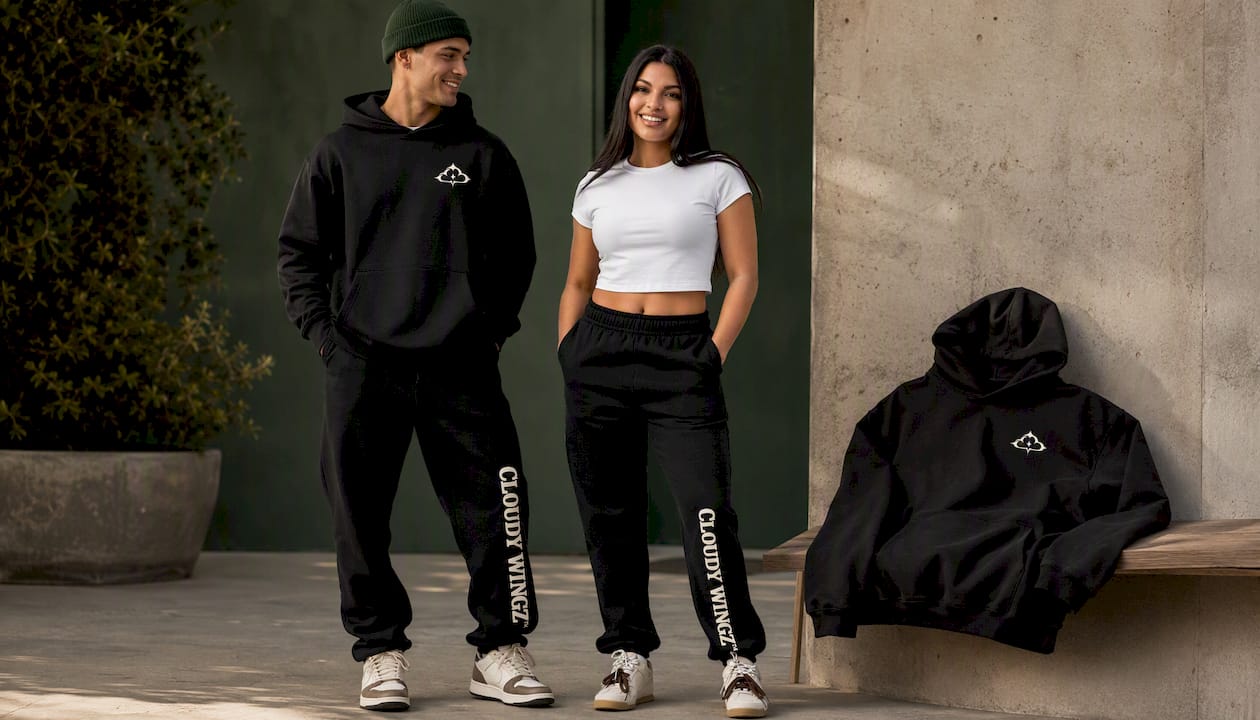
If you’re building a full cold-weather outfit, pair either pant with the Heavy Hitter oversized hoodie for a matched heavyweight set, or browse the full sweats collection to compare cuts and colors side by side. Every order over $75 ships free, and returns are straightforward if the fit isn’t right the first time, so there’s little downside to trying a pair against your own measurements. Check the size chart against your waist and inseam, pick your fit, and place the order.
An Editorial Note on Buying Heavyweight Cotton
Heavyweight cotton asks for a little patience most buyers aren’t expecting. It arrives stiffer than you’d like, it demands cold water and low heat, and it costs more upfront than a thin polyester jogger. All of that is worth it the moment you realize the thin pair needed replacing twice by the time the heavyweight one is just breaking in.
The mistake I see most often isn’t picking the wrong GSM, it’s ignoring fit notes because the number on the tag matches a favorite pair from a completely different fabric. Read the measurements. Heavy fabric doesn’t lie about your size the way stretch fabric does.
— Cloudy
Sources
FAQ
What Are the Best Heavyweight Sweatpants for Men?
The best options combine a stated GSM between 380 and 500, double-stitched construction, and a size range that fits your actual body rather than a narrow S to XL band. Cloudy Wingz Men’s Heavyweight Sweatpants meet all three with heavy cotton fleece, reinforced seams, and sizing from S to 5XL.
What Are Heavyweight Sweatpants, Exactly?
Heavyweight sweatpants are pants made from fabric weighing significantly more per square meter than standard joggers, typically starting around 380 GSM. That extra weight, usually cotton fleece or loopback, adds warmth, structure, and durability that lighter athletic sweatpants can’t match.
What Are Some Good Heavy Sweatpants for Men?
Look for pairs with an exact GSM listed, double-stitched or flatlock seams, and a fit description that matches your intended use, whether that’s lounging or light activity. Buyer guides consistently point to fabric weight and construction quality as the two factors that separate a durable pair from one that wears out fast.
What Are the Warmest Sweatpants for Men?
The warmest options sit at the top of the heavyweight range, generally 475 to 500 GSM or higher, in brushed cotton fleece rather than a lighter French terry. Fleece traps more air against the skin than loopback or terry knits, which is why it’s the standard choice for maximum warmth in cold climates.
How Much Do Cloudy Wingz Heavyweight Sweatpants Cost?
Current pricing for Cloudy Wingz heavyweight sweatpants is listed directly on the product page, where you can also check size availability. Orders over $75 ship free, and the brand offers easy returns if the fit needs adjusting.